Otoplasty (Cosmetic ear surgery)
Candidates. Generally children 4 years or older who are about to enter grade school, and who are the target of ridicule by their classmates or family members. Some patients undergo this procedure as adolescents or adults having not received the timely support of their parents.
|
|


Surgery. In children the surgery is performed under general anesthesia as they are unable to cooperate at this age, in adults it is performed with sedation and local anesthesia. The surgery corrects the cause of the deformation by reshaping the skin and cartilage with appropriate symmetry of the ears. The incision is made in the back of the ear to avoid visible scars and the skin is sutured with very fine thread.
Postoperative care. Following 90 minutes of surgery, a special dressing and soft bandages are applied to the operated area, adults and cooperative children may go home the same day. Generally there is no pain, but analgesics and anti-inflammatories may be administered prophylactically. Parents are instructed to ensure that the child not sleep on his or her ears the first 6 days, and a week later the bandages are removed and in some cases a headband or night bandaging is indicated for two more weeks. Given that the ear is a very delicate tissue, swelling may not subside completely for 2 months, although the results are seen within 10 days.
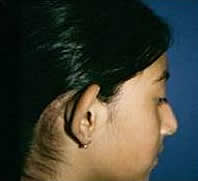
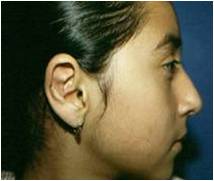
Before and 4 months after surgery.
Patient with protruding ears: the absent folds are reshaped and folded back toward the head.